Protocols
,
N°
10
Gua sha has been practised for centuries across East Asian medicine — not as a beauty trend, but as a therapeutic tool for circulation, tension, and lymphatic movement. Learning to use it intentionally transforms a two-minute routine into a genuine ritual.
Start With Intention, Not Speed
The most common mistake with gua sha is treating it like a fast-paced facial massage. True gua sha demands slowness. Each stroke should be long, deliberate, and angled correctly — typically at 15 to 45 degrees to the skin. Rushing collapses the technique into something decorative rather than functional.
The Protocol
Begin at the neck. Always. The lymph nodes here are the drainage pathways for everything that will follow. Three slow strokes down each side of the neck, following the line of the sternocleidomastoid muscle, prepares the system to receive.
Move to the décolleté, then upward: jawline, cheekbones, brow bone, forehead. Each zone has its own direction and its own relationship to the underlying fascia. A good gua sha practice is, at its heart, a study in anatomy.
Oil Is Non-Negotiable
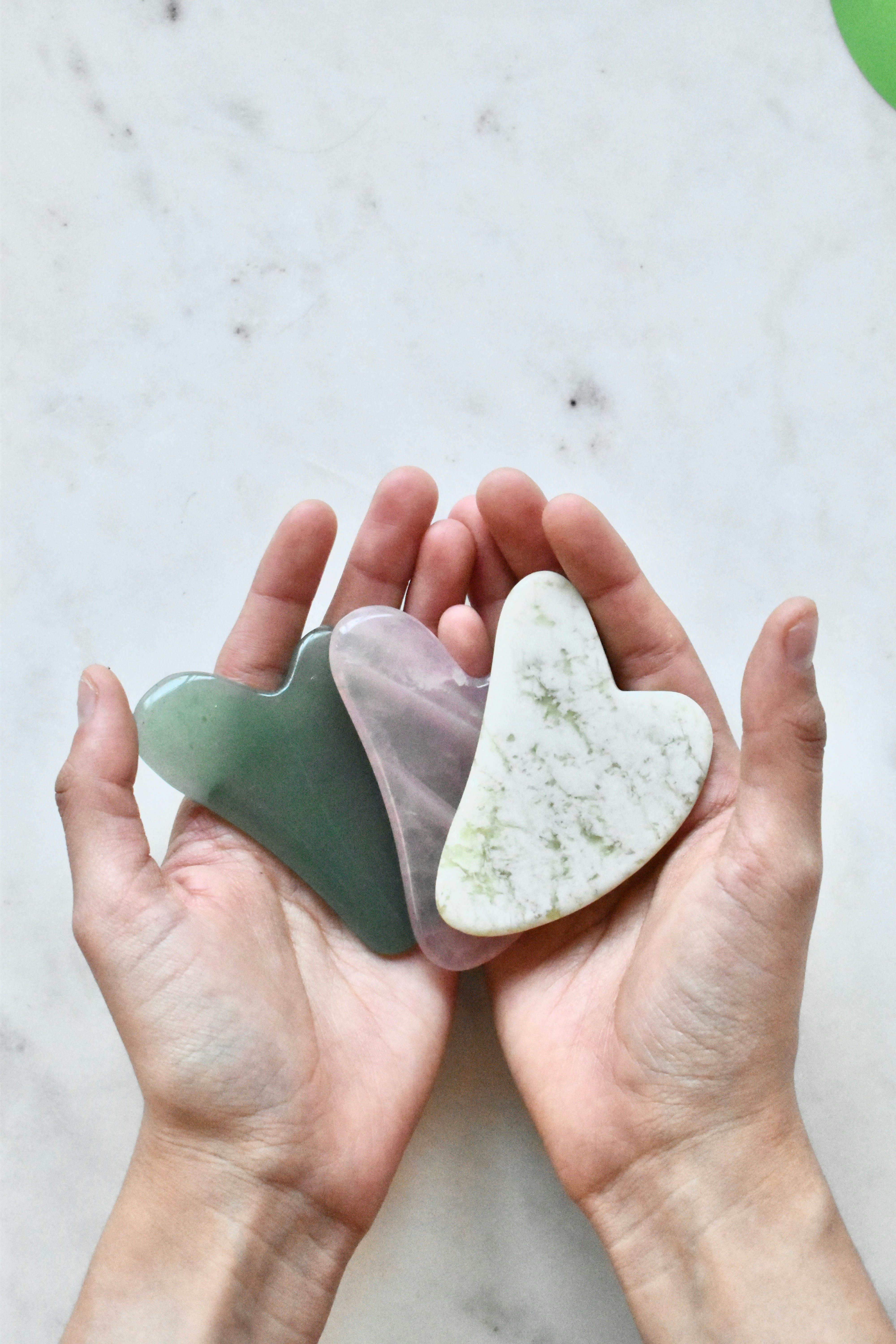
Dry gua sha is not gua sha. The tool must glide — never drag. A facial oil applied generously before you begin protects the skin barrier and allows the stone (jade, rose quartz, bian stone) to move fluidly across the surface. If you feel resistance, add more oil.
Frequency
Three to four times per week is ideal for most people. Daily practice is possible, but the skin and underlying tissue need rest to integrate the work.
— A NOTE IN THE MARGIN
"A good massage doesn't just release tension. It teaches the body what it has forgotten: how to let go."
Notes & references
Note 1
The Neck Comes First
Always begin at the neck before moving to the face. The lymph nodes here act as the drainage system for the entire protocol — priming them first makes every subsequent stroke more effective.
Note 2
On dermal remodelling
Collagen synthesis, by contrast, is patient work — measured in months, not weeks. Most clinical endpoints in the literature land between week 12 and week 24 post-stimulus.
Note 3
A note on this piece
Written in the consultation room over four mornings. Edited with Helena Park. Errors are ours; the patience is the body's.
Speciality
— Ch. 05 · Continue reading